
Dissolution Of Marriage in Allendale County
Allendale County dissolution of marriage records are held by the Clerk of Court at the Allendale County Family Court. The county seat is the town of Allendale, and all divorce cases for county residents are handled there. Whether you need to search for an existing marital dissolution case or obtain a copy of a divorce decree, the Clerk of Court is the right place to start. The statewide Family Court portal also provides online access to Allendale County divorce cases at no charge.
Allendale County Quick Facts
Allendale County Family Court and Clerk of Court
The Allendale County Clerk of Court maintains all dissolution of marriage records filed in the county. Every divorce complaint, court order, and final decree from Allendale County is stored and managed by this office. The Clerk can search records by party name or case number and provide copies of documents from the case file. Allendale County is part of the 14th Judicial Circuit of South Carolina.
Because Allendale is a smaller county with a population of roughly 8,700, the volume of dissolution of marriage cases is lower than in larger counties. This can sometimes make it easier to locate specific records. However, the same South Carolina rules for access and fees apply here as they do in every other county. The Clerk of Court office in Allendale handles all filings and records requests for county residents. You can find contact information for the office through the county government website at allendalecounty.com.

The Allendale County government website provides office hours and contact details for the Clerk of Court. Call ahead before visiting to confirm the office is open and to ask about the best way to submit your request for dissolution of marriage records.
Searching for Allendale County Divorce Records
The quickest way to search for a dissolution of marriage case in Allendale County is through the South Carolina Family Court Case Management System online portal. This free resource covers all 46 South Carolina counties including Allendale County.
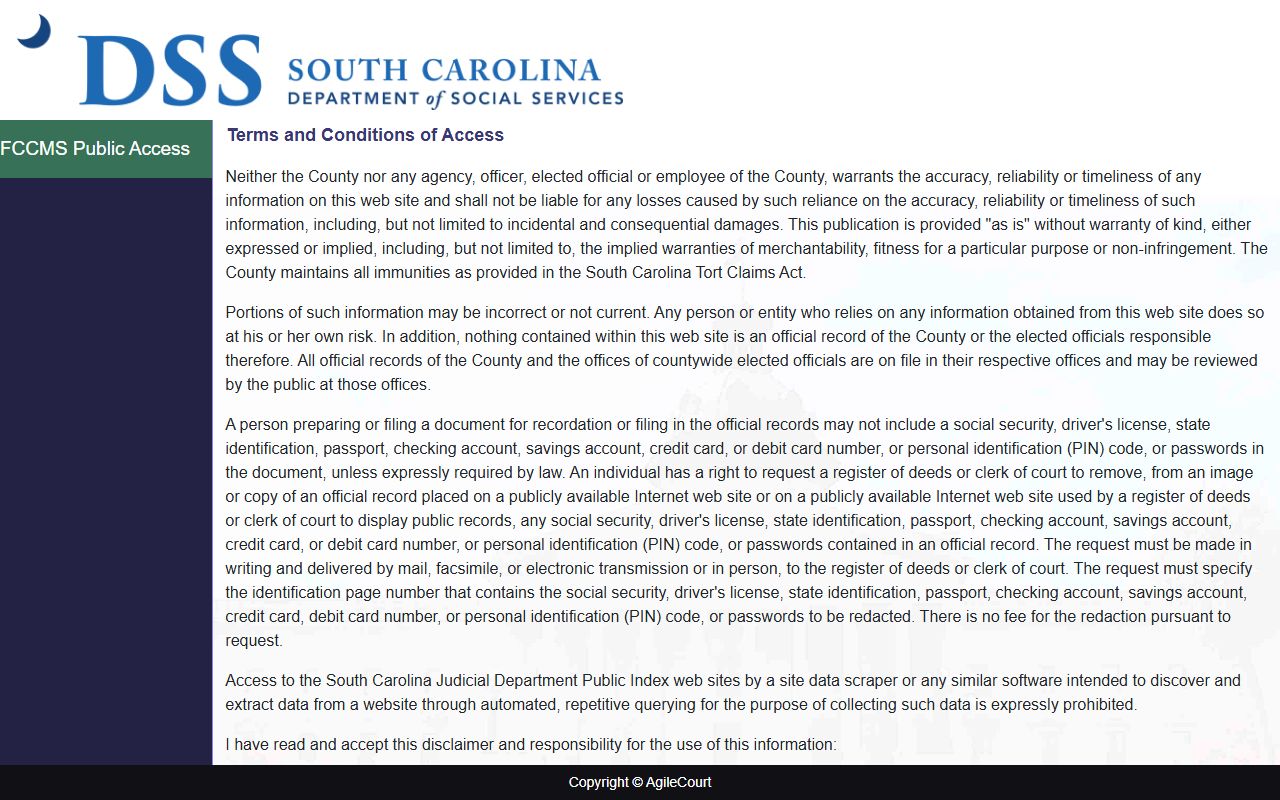
You can access the statewide portal at portal.fccms.dss.sc.gov. Search by party name or case number to find Allendale County divorce cases. The portal returns basic case information such as filing date, case status, and assigned judge. It does not include the actual documents from the file. Once you find the case number through the portal, contact the Allendale County Clerk of Court to request the documents you need.
For in-person searches, visit the Allendale County courthouse. Bring a valid ID and the names of the parties involved. Staff can locate the case and make copies for you. Copy fees vary depending on the number of pages. Certified copies cost more than plain copies and are required for most legal purposes. The South Carolina Courts website at sccourts.org also provides general information on accessing court records across the state.
Note: If you are searching for a historical Allendale County divorce case from several decades ago, allow extra time as older physical files may need to be retrieved from storage.
Filing a Dissolution of Marriage in Allendale County
Filing a dissolution of marriage in Allendale County follows the same steps required by South Carolina law for all counties. You start by preparing and filing a complaint for divorce with the Allendale County Clerk of Court. The standard filing fee is $150. The Clerk assigns your case a number and the documents become part of the public record.
South Carolina law sets out grounds for divorce under S.C. Code Ann. § 20-3-10. The no-fault ground is the most commonly used and requires at least one year of continuous separation with no resumption of marital life. Fault-based grounds are adultery, physical cruelty, habitual drunkenness or drug dependency, and desertion lasting one full year. You must meet the residency requirements of § 20-3-30, which require one year of South Carolina residency for the filing spouse, or three months if both spouses live in South Carolina. Allendale County residents who meet these requirements file their cases at the local Family Court.
South Carolina courts divide marital property using equitable distribution rules under § 20-3-620. The court evaluates each spouse's contribution to the marriage, the length of the union, and financial circumstances before making a property award. Child custody and support are determined based on the best interests of the child. Once all issues are resolved, the Family Court in Allendale County enters a final divorce decree that ends the marriage and becomes a permanent part of the county's dissolution of marriage records.
What Allendale County Dissolution Records Include
Allendale County dissolution of marriage files contain every document submitted during the case. This typically includes the complaint for divorce, the other party's answer, any motions filed by either side, temporary court orders, financial declarations, and any settlement agreements. Each document is stamped and dated when filed and becomes part of the permanent case record.
The divorce decree is the most important document in the file. It is the final court order signed by the judge that dissolves the marriage. The decree states the grounds for the divorce, the date the marriage is legally ended, any rulings on property division, custody and visitation terms, support obligations, and whether a name was restored. Certified copies of the Allendale County divorce decree are often needed for name changes, property transfers, and remarriage. The Allendale County Clerk of Court issues certified copies upon request.
Dissolution of marriage records in Allendale County are public records under the South Carolina Freedom of Information Act, S.C. Code Ann. § 30-4-30. Any member of the public may request access. You do not need to be a party to the case. Portions of the file dealing with minor children may be restricted, but the core record is open to the public.
Divorce Vital Records for Allendale County
If you need a short-form confirmation of a divorce rather than the full court file, you can obtain a certified divorce report from the South Carolina Department of Public Health. This is useful when you only need to confirm a divorce occurred and do not need the detailed terms from the Allendale County court record.
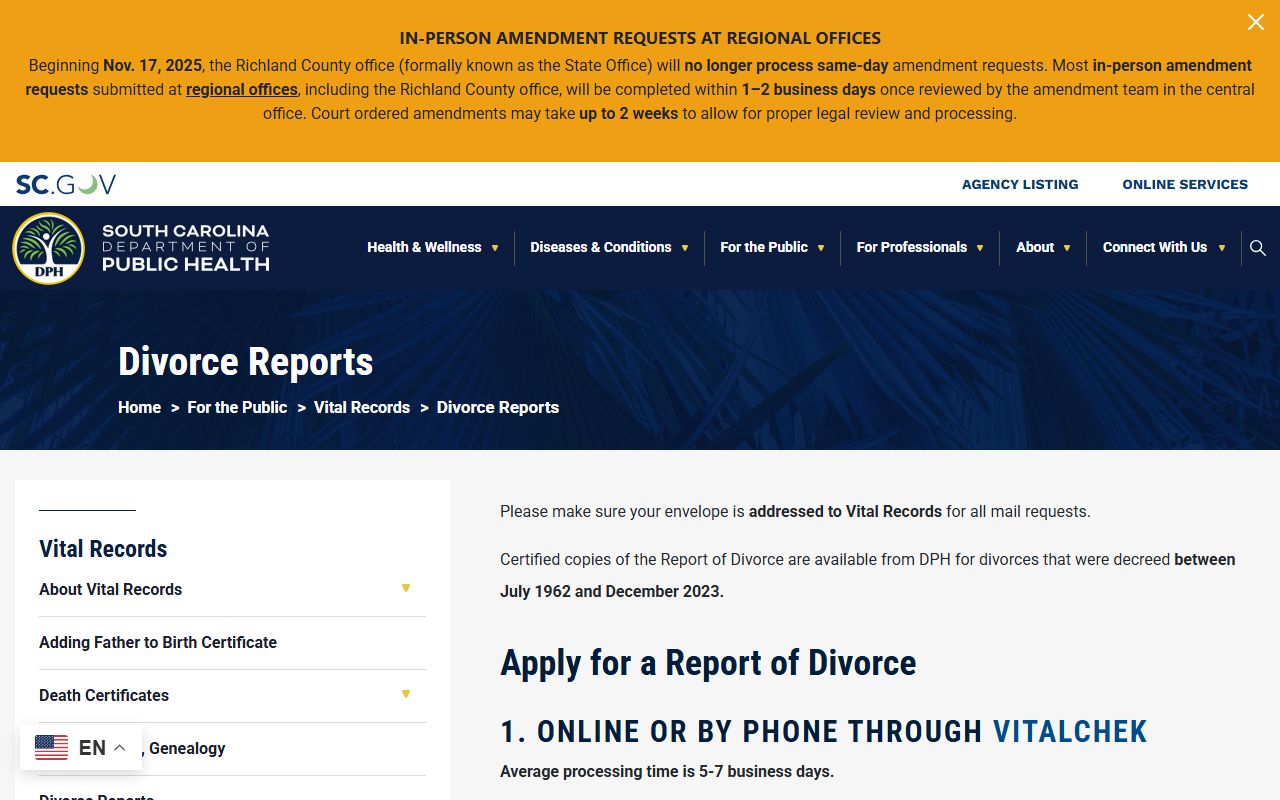
The SC DPH Divorce Reports page explains how to order a certified divorce report by mail. The fee is $12 per copy. Records are available for divorces granted in South Carolina from July 1962 through December 2023. Requests can be mailed to the Division of Vital Records, 2600 Bull Street, Columbia, SC 29201. A divorce report from DPH shows the names of the parties, the date, and the county where the divorce was granted. For the full Allendale County dissolution of marriage file with all terms and conditions, the Clerk of Court remains the proper source.
Many legal transactions require the full court decree rather than a DPH divorce certificate. When in doubt, contact the requesting party to confirm which document they need before you order.
Getting Help With Allendale County Divorce Cases
Legal resources are available to Allendale County residents who need help with a dissolution of marriage case. Some are free. Others offer affordable options for people who do not qualify for free services.
South Carolina Legal Services offers free legal assistance to income-qualifying residents in Allendale County. Their family law staff can help with filing, forms, and court procedures for dissolution of marriage cases. The South Carolina Bar lawyer referral service at (803) 799-6653 can connect you with a private family law attorney who handles cases in the 14th Judicial Circuit. Self-represented filers can find forms and instructions on the SC Courts website through the simple divorce packet page. These packets are designed to walk people through each step without a lawyer.
For general information about divorce law in South Carolina including rules that apply in Allendale County, visit WomensLaw.org. Their South Carolina divorce page covers topics like grounds, residency, property, and safety planning in plain language that is easy to understand.
Note: South Carolina Legal Services eligibility is income-based. Contact them early in the process to find out if you qualify before your next court date.
Nearby Counties
Allendale County sits in the lower part of South Carolina. Several surrounding counties have their own Family Courts. If you are not sure which county a person lived in at the time of their divorce, check the filing address in the case record.