
Find Dissolution Of Marriage Cases in Dillon County
Dillon County dissolution of marriage cases are on file with the Clerk of Court at the Dillon County Family Court. The county sits within the 4th Judicial Circuit of South Carolina. If you need to search for a dissolution of marriage record in Dillon County, you can use the statewide FCCMS portal online or go to the courthouse in Dillon. This page covers where records are kept, how to find them, and what South Carolina law says about the dissolution process.
Dillon County Quick Facts
Dillon County Clerk of Court and Family Court
The Dillon County Clerk of Court holds all dissolution of marriage case files. Every complaint, order, decree, and related document is stored at the courthouse in Dillon. The Clerk of Court office accepts new case filings, provides copies of records, and certifies official documents. Staff can help you search by party name or case number. You can find general information about Dillon County court services at dilloncounty.org.
Dillon County is in the 4th Judicial Circuit alongside Darlington, Florence, and Marlboro counties. Family Court judges from this circuit hear dissolution of marriage cases in Dillon County. The court handles all domestic matters including custody, child support, and protection orders. All dissolution of marriage records remain on file at the Dillon County courthouse as public documents.
Contact the Dillon County Clerk of Court directly to confirm current office hours and any specific requirements before you visit.
| Court | Dillon County Family Court Dillon, SC |
|---|---|
| Judicial Circuit | 4th Judicial Circuit |
| County Website | dilloncounty.org |
| FCCMS Portal | portal.fccms.dss.sc.gov |
Searching Dillon County Dissolution of Marriage Records
The FCCMS Public Access Portal is the fastest way to search dissolution of marriage records in Dillon County. The portal is run by the South Carolina Department of Social Services and covers Family Court cases statewide. You do not need an account to search. Enter a party name or case number at portal.fccms.dss.sc.gov to see case details, filing dates, and current status. This system covers Dillon County along with all other South Carolina counties.
In-person searches at the Dillon County Clerk of Court give you direct access to the full case file. This is the best option when you need certified copies of a dissolution of marriage decree. Bring a photo ID when you visit. Older case files may require more time to locate. The Clerk of Court office is your main point of contact for all official record requests in Dillon County.
Online Access to Dillon County Family Court Records
The state of South Carolina provides a public-facing portal that connects to Family Court case data across every county. Dillon County dissolution of marriage cases are included in this system. Searches are free and require no registration.
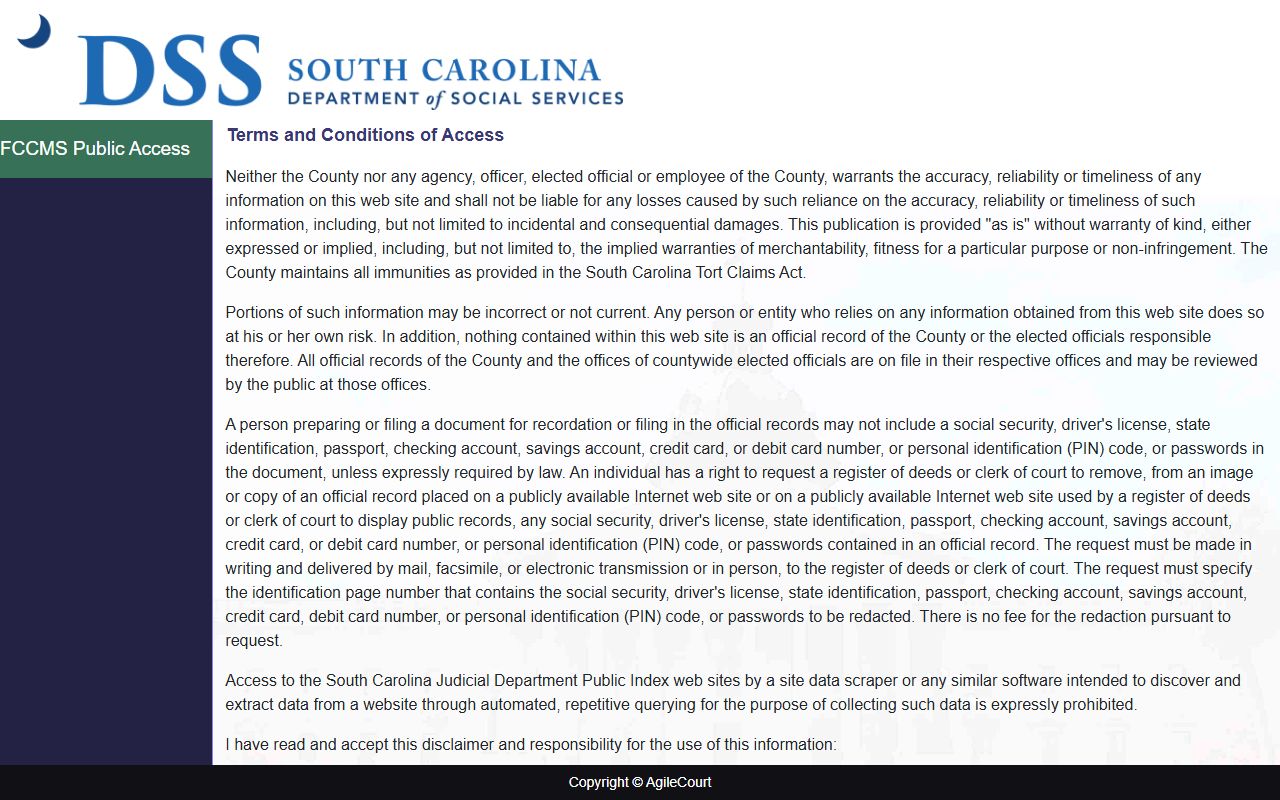
The FCCMS portal at portal.fccms.dss.sc.gov shows case numbers, party names, hearing dates, and case status. Use it to confirm whether a dissolution of marriage was finalized before making a trip to the Dillon County courthouse.
Dissolution of Marriage Laws That Apply in Dillon County
South Carolina law controls every part of the dissolution of marriage process in Dillon County. The main statute for divorce and dissolution is S.C. Code Ann. § 20-3-10. This section lists the valid grounds for dissolution in South Carolina. One no-fault ground exists: one year of continuous separation between the spouses. Fault grounds include adultery, physical cruelty, habitual drunkenness or drug use, and desertion for at least one year. You do not have to prove fault to get a dissolution in Dillon County. Most people use the one-year separation ground.
Residency rules matter in Dillon County. Under S.C. Code Ann. § 20-3-30, one spouse must have lived in South Carolina for at least one year before filing. If both spouses live in South Carolina, only three months of residency is required. You file in the county where you live. If you live in Dillon County, you file at the Dillon County Clerk of Court. Marital property in Dillon County cases is divided under equitable distribution rules found in S.C. Code Ann. § 20-3-620. The court considers each spouse's income, contributions, and circumstances when dividing property.
Under S.C. Code Ann. § 30-4-30, dissolution of marriage records in Dillon County are public unless a judge has sealed specific parts of the file.
How to File a Dissolution of Marriage in Dillon County
Filing starts at the Dillon County Clerk of Court office. You submit a Summons and Complaint for divorce along with any other required forms. The filing fee is approximately $150. Once the Clerk of Court accepts your documents and assigns a case number, you must serve the other party with the dissolution papers. Service can be done through the Dillon County Sheriff, a private process server, or certified mail with return receipt. The proof of service must be filed back with the court to move the case forward.
If both parties agree on all issues, the case proceeds as uncontested. A signed settlement agreement covering property, debts, support, and children goes before the judge. After reviewing the agreement, the judge can enter a final dissolution of marriage decree. Once entered, the decree becomes a permanent record at the Dillon County Clerk of Court. You can order certified copies of the decree from the clerk at any time after the case closes.
The South Carolina Judicial Branch provides free self-represented litigant packets for simple dissolution cases. Download them at sccourts.org.
Note: Fees and filing requirements in Dillon County can change. Contact the Clerk of Court to verify current information before you file.
South Carolina Statutes and Dillon County Dissolution Cases
Title 20 of the South Carolina Code of Laws sets the rules for all dissolution of marriage cases in Dillon County. Reading the relevant statutes helps you understand what rights and obligations apply to your case.
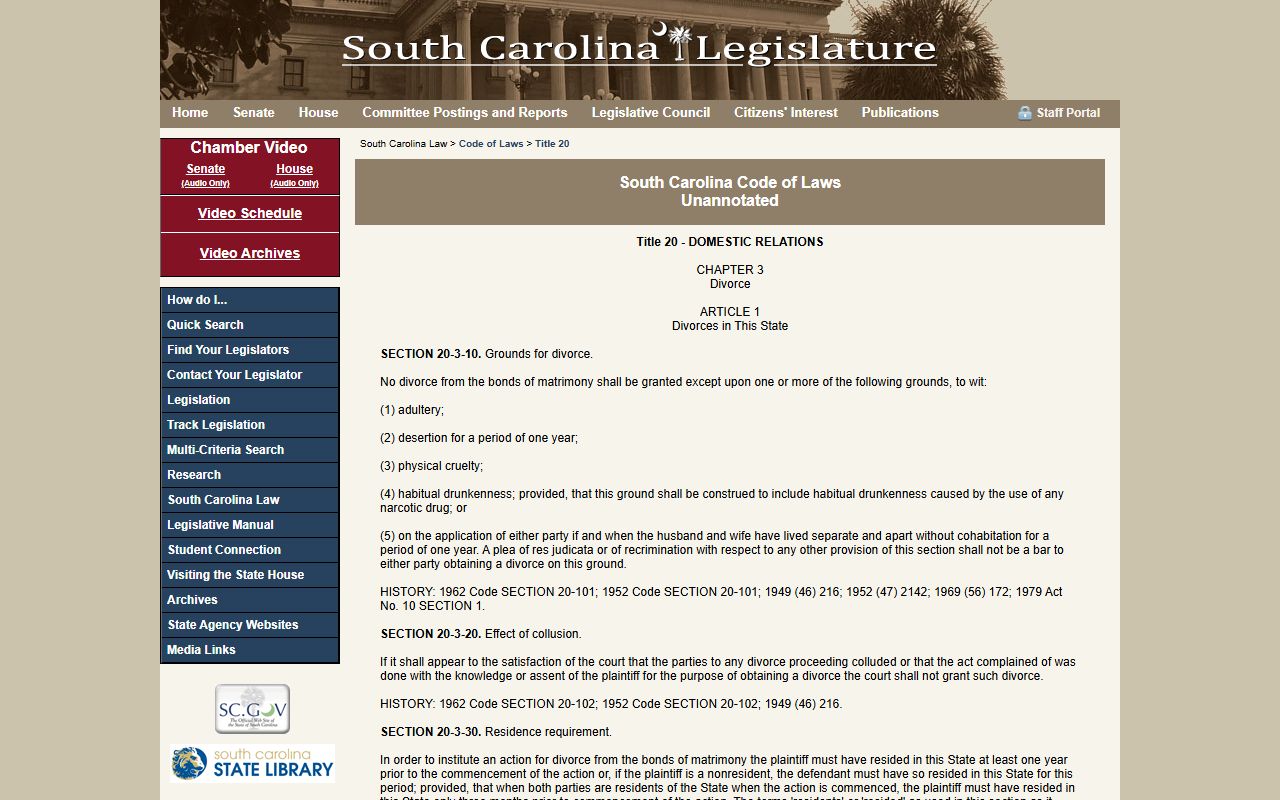
Access the full text of South Carolina dissolution statutes at scstatehouse.gov. The statutes explain grounds, residency, property rules, alimony, and child custody standards that apply in every Dillon County Family Court case.
Dillon County Dissolution Certificates Through DPH
The South Carolina Department of Public Health maintains vital records for dissolutions that took place across the state. A dissolution certificate issued by DPH is a short document that confirms a dissolution occurred. It shows both parties' names, the date, and the county of record. Many people in Dillon County use a DPH certificate when they need basic proof of dissolution for administrative purposes.
Order a certificate at dph.sc.gov. The fee is $12 per certified copy. Records span from July 1962 through December 2023. Mail requests go to 2600 Bull Street, Columbia, SC 29201. If you need the full dissolution decree with all terms, the Dillon County Clerk of Court is the right place to go.
Legal Help and Resources for Dillon County Residents
Getting help with a dissolution of marriage in Dillon County is easier with the right resources. South Carolina Legal Services offers free legal help to low-income residents. Learn more at sclegal.org. The South Carolina Bar at (803) 799-6653 can connect you with a family law attorney who practices in the 4th Judicial Circuit.
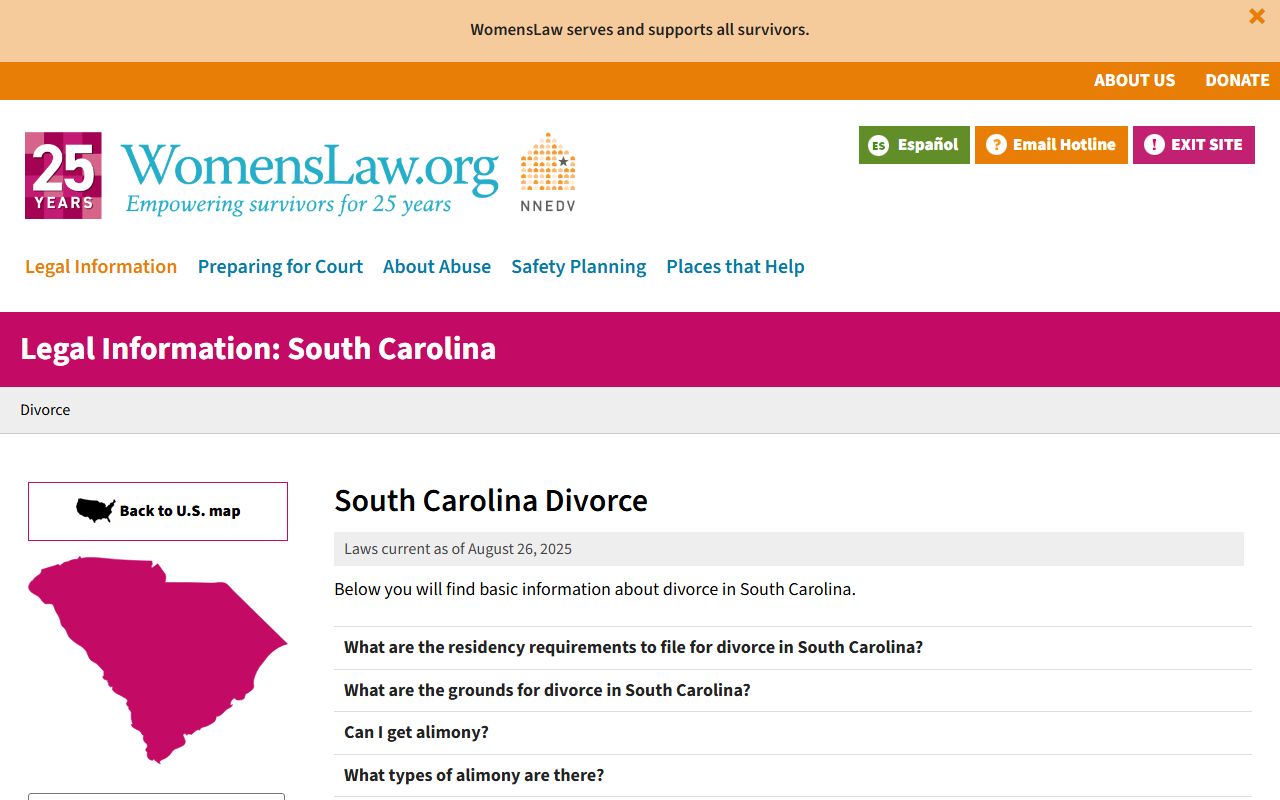
The Women's Law organization offers a plain-language guide to South Carolina dissolution law at womenslaw.org. It covers grounds, the process, and what to expect at each step. This resource is helpful for anyone dealing with a dissolution of marriage in Dillon County who wants to understand the basics before speaking with an attorney.
For child support questions, contact the South Carolina Department of Social Services at dss.sc.gov or call 1-800-768-5858. Payments go through the State Disbursement Unit at P.O. Box 100302, Columbia, SC 29202.
Nearby Counties
Dillon County is surrounded by several other South Carolina counties. Dissolution of marriage cases must be filed in the county where you live. If you are unsure which county applies, check your current address against county lines.